Email list cleaning

Clean email marketing lists before major sends

Subscriber lists decay, imports contain typos, and old audiences can turn into deliverability risk. VeriMails helps email marketing teams clean lists before campaigns, migrations, launches, and re-engagement sends.

Our CRM had years of imports, webinar leads, and dead work emails mixed together. One VeriMails cleanup removed 910 invalid contacts from a 12K segment before the newsletter went out.
Owen C. — Marketing Operations Manager at B2B Software Company, Denmark

TL;DR

Use VeriMails before important email marketing moments: big newsletters, product launches, Black Friday campaigns, database migrations, win-back sends, and any blast to a dormant segment. Export the list, verify it, suppress invalid records, and re-import clean status fields into the email platform.

  • Under 3% bounce rate is healthy, 3-5% needs cleanup and attention, and above 5% is high risk.
  • Clean active lists before high-stakes sends and verify dormant subscribers before any re-engagement campaign.
  • Use bulk verification for exported lists and the API to validate new subscribers at signup.
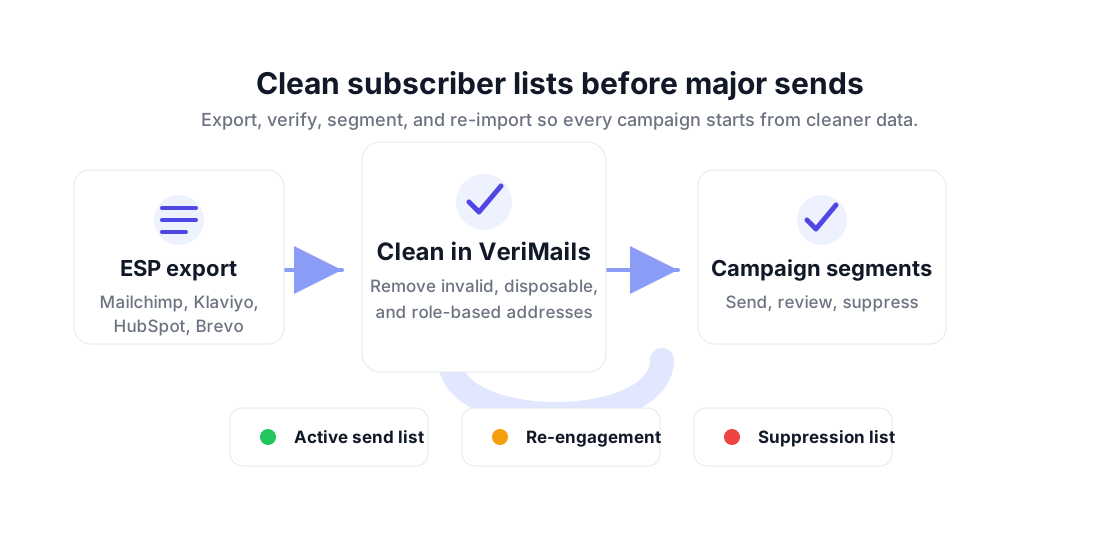
Email marketing list cleaning workflow from ESP export to VeriMails verification and campaign segments
Email marketing list cleaning is a simple loop: export the audience, verify the email column, create send, review, and suppression segments, then re-import clean fields into the ESP.

Why email marketing lists need ongoing hygiene

Email marketing databases get messy even when subscribers originally opted in. People abandon inboxes, change jobs, mistype addresses, use temporary emails for coupons, or sit dormant for months. A list that performed well last quarter can become a liability before the next large send.

That matters because email service providers and mailbox providers look at campaign quality signals. Hard bounces are one of the clearest signs that a sender is mailing stale or poorly collected data. When the bounce rate climbs, campaign reporting gets harder to trust and future inbox placement can become more fragile.

Cleaning the list does not mean deleting every inactive subscriber. It means knowing which addresses are invalid, which deserve review, and which can stay in the active audience. VeriMails gives marketing teams the labels they need to make those decisions before a campaign goes out.

Practical rule: clean the list before any campaign where a bad send would be expensive, visible, or hard to unwind.

How verification supports better segmentation

Most ESPs already have segments for engagement, purchase history, geography, and lifecycle stage. Verification adds another layer: address quality. Invalid and disposable records can be suppressed. Role-based addresses can be reviewed. Catch-all records can be separated from normal subscribers when the campaign is sensitive.

That lets the marketer choose a send policy instead of relying on guesswork. For a regular newsletter, the team might send to the valid segment and suppress invalid rows. For a high-value B2B audience, a review segment might be worth checking manually. For a dormant win-back, the cleanest segment should usually go first.

Email marketing workflows this improves

Verification is most useful when it is tied to the campaign moments that create real deliverability and reporting risk.

Newsletter hygiene

Regular publishers can clean old subscribers before large editorial sends and keep reporting from being distorted by unreachable addresses.

Re-engagement sends

Dormant subscribers are higher risk because some addresses have gone inactive. Verify before a win-back so the first wave is cleaner.

ESP migrations

Clean lists before moving to a new platform, so the first campaign from the new account does not inherit stale data from the old system.

Launch campaigns

Product launches, sales events, and course openings concentrate risk into a short window. Cleaning the audience first reduces avoidable damage.

Compliance reviews

Verification labels help teams document how invalid, disposable, role-based, and risky records are handled before important sends.

Signup quality

API checks at signup reduce typos and throwaway addresses before welcome sequences, coupon flows, or gated content emails begin.

A practical email list cleaning workflow

Use this as a repeatable operating process before important campaigns.

Step 1

Export the list

Pull the relevant audience from the ESP with email, engagement, source, and segment fields. Keep enough context to re-import clean decisions later.

Step 2

Verify the CSV

Upload the file to VeriMails, select the email column, and let bulk verification classify each address into actionable categories.

Step 3

Segment results

Send to valid rows, review catch-all and role-based records when needed, and suppress invalid, disposable, or clearly unsafe contacts.

Step 4

Measure after sending

Under 3% bounce rate is healthy, 3-5% needs cleanup and attention, and above 5% is high risk. Use the result to set the next hygiene cycle.

Bulk cleaning and real-time prevention work together

Bulk cleaning fixes the list you already have. It is the right choice before newsletters, ecommerce promotions, course launches, webinar reminders, and database migrations. It gives the marketing team a CSV result that can be re-imported into the ESP or used to create cleaner segments.

Real-time prevention handles the next problem: bad addresses entering the list tomorrow. With the Email Verification API, teams can validate signup forms, lead magnets, trials, and checkout captures before the address joins a welcome flow. The result is less emergency cleanup later.

Where to start

If the list has never been cleaned, start with the highest-risk segment: dormant subscribers, imported contacts, old giveaway leads, or any audience about to receive a large campaign. Once the process is proven, add periodic hygiene for active audiences and API checks for new signups.

For step-by-step platform workflows, see the VeriMails guides for Mailchimp, Klaviyo, ActiveCampaign, and Brevo.

Compare tools before your next newsletter send

Compare VeriMails vs MailerCheck and VeriMails vs NeverBounce before you clean a newsletter or lifecycle list.

For campaign workflows, connect verification to Mailchimp or ActiveCampaign before you upload the next audience.

Email list cleaning FAQs

Clean the list before major campaigns, re-engagement sends, seasonal promotions, and migrations between email platforms. High-volume newsletters should also schedule periodic hygiene checks.
Under 3% is healthy, 3-5% needs cleanup and attention, and above 5% is high risk. List cleaning helps remove invalid contacts before they affect campaign performance and sender reputation.
Yes. Export the audience or segment as a CSV, verify the email column in VeriMails, and re-import the result fields or clean segment back into the email platform.
Both can be useful. Bulk cleaning fixes existing lists, while API verification at signup keeps invalid, disposable, and risky addresses from entering the list in the first place.
Verify dormant subscribers before sending the win-back. Invalid contacts should be suppressed, risky categories should be reviewed, and the clean segment should be sent gradually when reputation risk matters.
We now verify every newsletter segment before sending. The last cleanup took under an hour, cut bounce risk below 1%, and gave sales a cleaner list to follow up.
Keira C. — Email Marketing Lead at Mid-Market Services Company, United States

Clean the list before the next campaign

Start with 100 free credits. No credit card required. Verify the risky segment, and send from cleaner campaign data.