VeriMails vs NeverBounce
NeverBounce is a mature email verification product now associated with the ZoomInfo ecosystem. Here is the buyer's view: expected cost, API shape, bulk workflow, catch-all handling, and when an existing NeverBounce setup is worth keeping.
Updated May 19, 2026
At a Glance
| Decision point | VeriMails | NeverBounce |
|---|---|---|
| 10,000 | $19 | $0.0019 |
| 25,000 | $39 | $0.00156 |
| 50,000 | $59 | $0.00118 |
| 100,000 | $99 | $0.00099 |
| 250,000 | $199 | $0.000796 |
| 500,000 | $349 | $0.000698 |
| 1,000,000 | $499 | $0.000499 |
| 2,500,000 | $999 | $0.0004 |
| 5,000,000 | $1,499 | $0.0003 |
Email Finder costs 20 credits only when VeriMails returns a verified person-level email. At the 10,000-credit pack, that is $0.038 per found email. Monthly plans start at $12.50/mo when billed yearly.
NeverBounce Pricing and Workflow Notes
NeverBounce is easiest to evaluate when you separate two questions: what your team will pay at the list sizes you actually run, and whether its existing API or ZoomInfo-linked workflow saves enough operating time to justify that cost. For procurement, confirm your current NeverBounce quote before buying a large list-cleaning pack.
NeverBounce API and Bulk Workflow
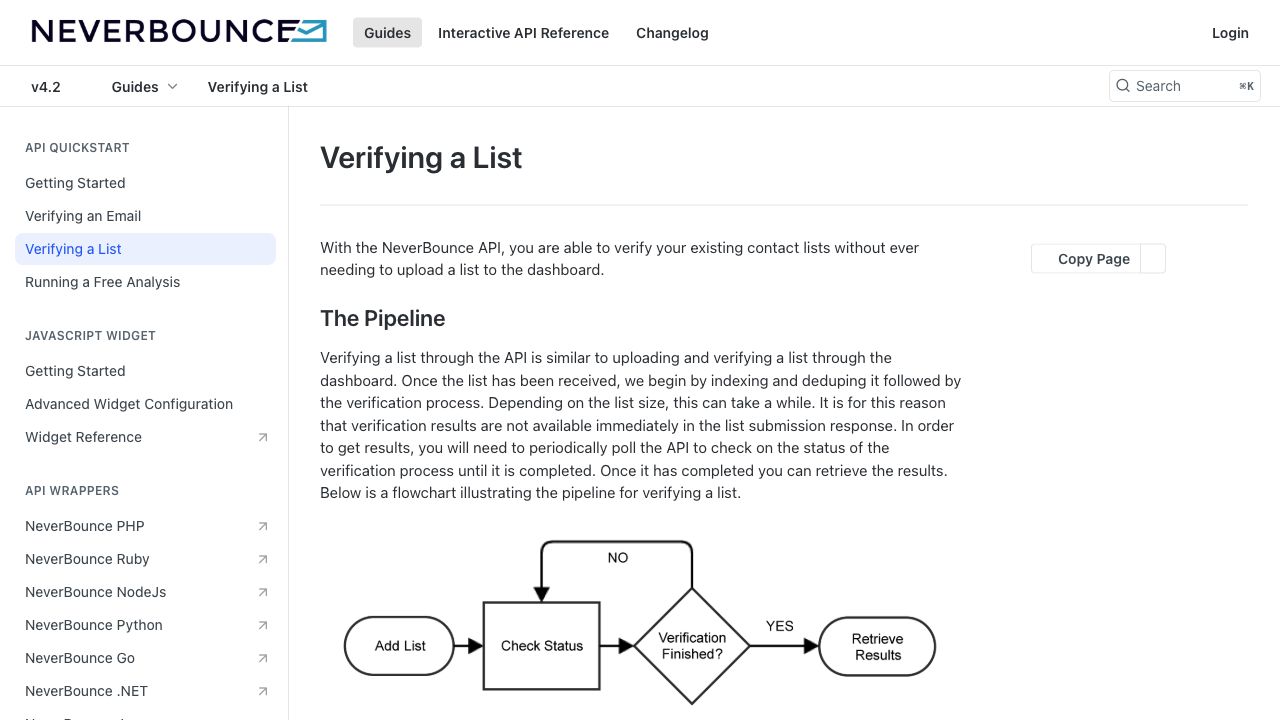
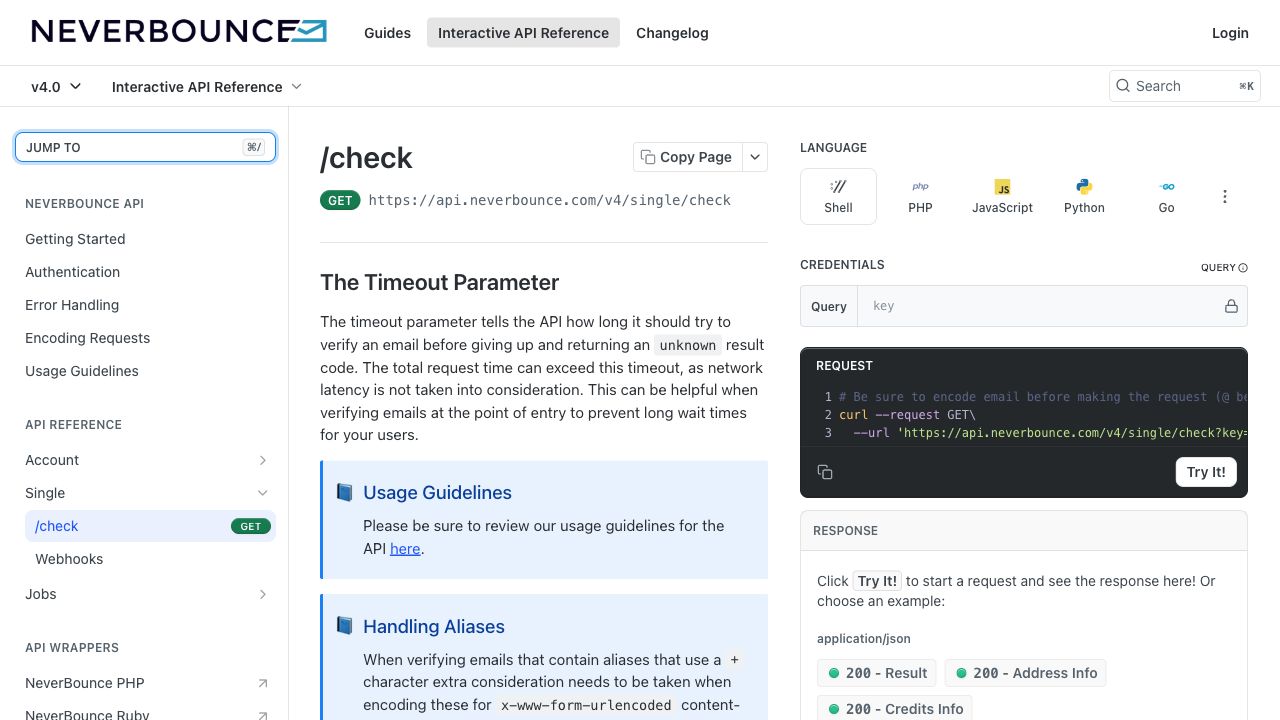
These visuals highlight the workflow implications for buyers: bulk verification runs asynchronously, while single-email checks use a dedicated API endpoint.
Pricing and Total Cost
NeverBounce pricing should be confirmed directly before purchase. For planning, common buyer estimates still show a materially higher cost than VeriMails at typical list-cleaning volumes.
Credit-pack costs at common volumes
| Volume | VeriMails | NeverBounce planning estimate | Buyer note |
|---|---|---|---|
| 10,000 emails | $19 | About $80 | Confirm current checkout or sales quote |
| 25,000 emails | $39 | About $125 | Useful for campaign-level budget planning |
| 100,000 emails | $99 | About $400-$500 | Confirm before buying a large pack |
| 250,000 emails | $199 | About $750-$1,000 | Model migration cost if NeverBounce is already embedded |
Use these NeverBounce figures as directional planning estimates, not as a replacement for the current vendor quote. VeriMails pricing is published on the VeriMails pricing page.
VeriMails credit pricing
| Credits | VeriMails price | Price per email |
|---|---|---|
| 10,000 | $19 | $0.0019 |
| 25,000 | $39 | $0.00156 |
| 50,000 | $59 | $0.00118 |
| 100,000 | $99 | $0.00099 |
| 250,000 | $199 | $0.000796 |
| 500,000 | $349 | $0.000698 |
| 1,000,000 | $499 | $0.000499 |
VeriMails credits never expire. New accounts receive 100 free credits on signup.
NeverBounce API and Bulk Workflow
NeverBounce's developer reference is strong and specific. The single-check API uses a REST endpoint at https://api.neverbounce.com/v4/single/check and can include optional credit information in the response. The same guidance says point-of-entry implementations should usually allow valid, catchall, and unknown results to proceed, while blocking disposable and invalid results.
For bulk verification, NeverBounce documents an asynchronous workflow. Lists can be supplied as a remote CSV URL or as data in the request body. After submission, NeverBounce indexes and dedupes the list, starts verification, and requires applications to poll the job status until the job is complete. For smaller lists under 50,000 records, its guidance says polling every 5 to 10 seconds is acceptable; larger lists should be polled less frequently.
| Developer question | VeriMails | NeverBounce |
|---|---|---|
| Real-time checks | REST verification API | Official /v4/single/check endpoint |
| Bulk input | CSV upload | Remote CSV URL or supplied data |
| Bulk processing model | Straightforward bulk verification | Async job with indexing, deduping, status polling, and CSV results |
| Documented result categories | Deliverability and catch-all signals | valid, invalid, disposable, catchall, unknown |
| Point-of-entry guidance | Use policy thresholds by risk | NeverBounce suggests allowing valid, catchall, and unknown; block disposable and invalid |
Catch-all Domain Handling
NeverBounce does detect catch-all domains: its official API reference includes catchall as a result code and defines it as a domain-wide accept-all or unverifiable setting. The important operational point is that a catch-all result is not the same as proof that a specific mailbox exists. It tells you the receiving domain accepts broadly enough that mailbox-level certainty is limited.
VeriMails keeps the catch-all signal explicit so senders can segment those addresses deliberately. For example, a team can send confirmed-valid addresses first, test catch-all addresses separately, or exclude catch-all domains from high-reputation campaigns.
| Catch-all question | VeriMails | NeverBounce |
|---|---|---|
| Does the tool identify catch-all domains? | Yes, as an explicit verification signal | Yes, as the official catchall result code |
| Does catch-all mean mailbox confirmed? | No; it marks domain-level accept-all behavior | No; NeverBounce describes it as accept-all or unverifiable |
| Recommended operating model | Segment by valid, risky, and catch-all policy | NeverBounce guidance advises allowing catchall at point of entry, but teams still need a send policy |
Ownership and Buyer Fit
DiscoverOrg announced the acquisition of NeverBounce in 2018, and NeverBounce is now commonly listed as a ZoomInfo company. That matters mainly for procurement and workflow fit. If your team already buys ZoomInfo data or has NeverBounce wired into CRM and marketing systems, staying with NeverBounce may reduce migration work.
VeriMails is the narrower verification-first choice. It is designed for teams that want predictable credit pricing, bulk CSV cleaning, an API layer, and catch-all detection without adopting a broader sales-intelligence or deliverability platform.
Who Should Choose Which?
Choose VeriMails if
You need low-cost verification at scale, bulk CSV cleanup, a straightforward API, non-expiring credits, and explicit catch-all segmentation for sales, marketing, recruitment, or CRM hygiene workflows.
Choose NeverBounce if
You already rely on NeverBounce integrations, want to stay inside a ZoomInfo-linked buying workflow, or need to preserve an established implementation that already uses NeverBounce result codes and job polling.
Run the Next Check in VeriMails
After comparing pricing, credits, API behavior, and catch-all handling, the practical next step is to verify a real sample from your own list.
Verification Accuracy
Both VeriMails and NeverBounce can help reduce bad addresses before a campaign. The difference is how clearly the result fits your next send: VeriMails keeps valid, invalid, disposable, role-based, catch-all, and unknown rows separate for decision-making.
Use a recent sample from your own CRM, not a perfect test list. The addresses that matter are the ones you plan to mail this week: old leads, imported contacts, role inboxes, catch-all domains, and records from mixed sources.
Who VeriMails Is Best For
Choose VeriMails when verification is the job and you want the result before the send.
- You already have a list and need to clean it before a campaign.
- You want prepaid verification credits that never expire.
- You need API and CSV verification without paying for a larger sales platform.
Frequently Asked Questions
Why teams switch to VeriMails
“We manage outbound for SaaS companies. VeriMails saves each client $200-400 a month compared to their old verifier. Easy upsell, easy retention.”
— David H. — Managing Partner at Revenue Agency, United States
“Switched from NeverBounce after they raised prices. VeriMails is cheaper at every tier and the results are the same. Migration took an afternoon.”
— Jake W. — Operations Manager at Demand Generation Agency, Australia
Related Comparisons
Try VeriMails Free
100 free credits on signup. No credit card required. See why teams switch to VeriMails.
Start Free