Email Verification for SaaS Signups
Keep free trials, demo requests, onboarding sequences, and product analytics cleaner by verifying email addresses before fake or unreachable users enter your product.
Need the exact cost before your next cleanup? Check VeriMails pricing and start with free credits.
TL;DR
- Verify at signup, demo request, and high-intent form submission so disposable, invalid, and typoed emails do not become product or CRM records.
- Use valid results for normal onboarding, suppress invalid records, and review risky or catch-all results before sales sequences or high-volume lifecycle email.
- For existing users and leads, run bulk verification before reactivation, product announcement, renewal, or account-based sales campaigns.
Why SaaS teams need verification before account creation
SaaS signup quality affects far more than deliverability. A bad email can distort trial conversion, product activation, sales handoff, customer success reporting, and lifecycle email performance. If a free trial is created with a disposable inbox or a typoed company address, the product team sees a user, but onboarding and sales cannot reliably reach that person.
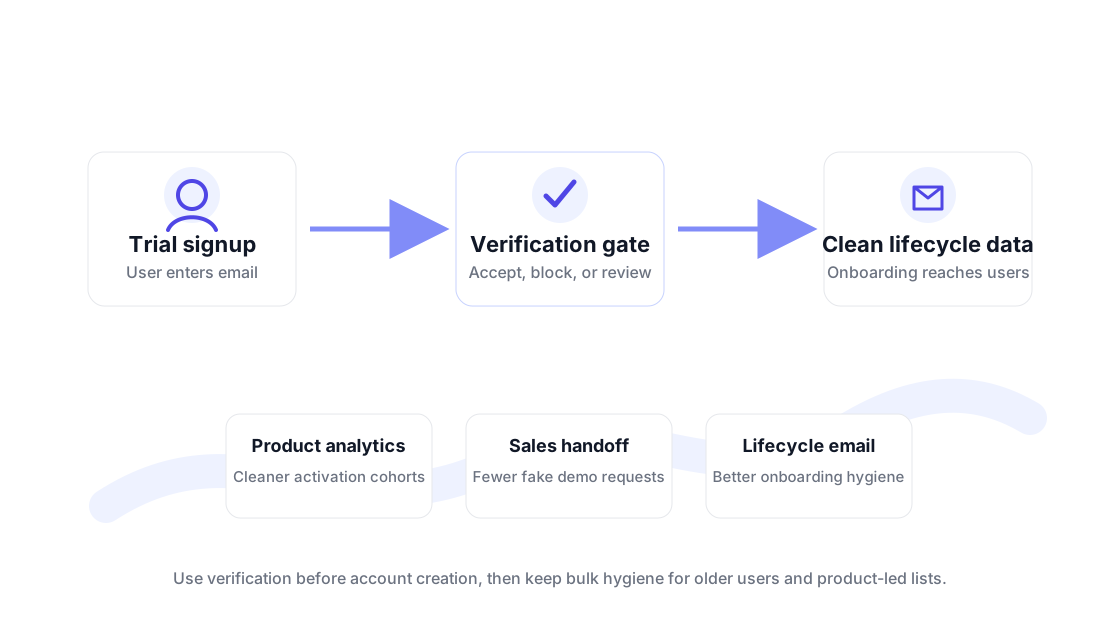
VeriMails should sit before the user record is created or before the lead is sent into the CRM. The result gives your application a simple policy decision: accept, ask for correction, suppress, or review. This is especially useful for free trials, demo requests, webinar signups, freemium products, and self-serve onboarding flows where volume is high and manual review is unrealistic.
Developers can add this to a registration handler with the email verification API. RevOps teams can clean older signups with bulk verification. If your team already uses HubSpot, Salesforce, or a marketing platform, start from the integration guides and write the verification result back as a lifecycle or routing field.
Everything you need to protect your signup flow
Stop fake accounts before they enter your system.
Signup Form Validation
Add a single API call to your registration flow. VeriMails returns a structured verification result so invalid or disposable addresses can be rejected before they touch your user database.
Disposable Email Blocking
Block temporary addresses from Mailinator, Guerrilla Mail, YOPmail, and hundreds of other throwaway providers. Ensure only users with permanent addresses can start trials.
Trial Abuse Prevention
Fraudulent signups often use disposable emails to claim multiple free trials. Blocking them protects your trial infrastructure and keeps your conversion metrics meaningful.
Lifecycle Email Hygiene
Onboarding sequences, feature announcements, and renewal reminders depend on reachable inboxes. Verification helps keep lifecycle email data cleaner.
Product Analytics Hygiene
Fake user accounts skew activation rates, retention curves, and funnel metrics. Cleaner signups make product data easier to trust.
Developer-Friendly API
One API request. JSON response. Works with any stack that can call a standard HTTP endpoint.
How it works in a SaaS registration flow
Keep the customer experience simple while giving your backend enough signal to protect the product.
Check the address before user creation
Call VeriMails when the form is submitted. Clear valid results continue through registration. Obvious invalid or disposable results can trigger a correction message before the account is created.
Route results by policy
Write the verification category to your product database or CRM. Keep valid users in onboarding, suppress invalid addresses, and review catch-all or risky records before sales outreach.
Keep lifecycle and analytics clean
Onboarding emails, renewal reminders, expansion campaigns, activation cohorts, and demo follow-up start from cleaner records instead of obvious fake signups.
Policy examples for product-led growth teams
The right policy depends on the form. A free trial signup usually deserves stricter filtering than a newsletter subscription. A demo request from a corporate domain may need different handling than a freemium account created with a personal inbox. VeriMails gives teams categories they can use without building a separate review queue for every record.
For self-serve signup, block disposable addresses and clear invalid addresses. For demo requests, route questionable records to sales operations before they reach a rep. For in-app invites, accept the request if the inviter is trusted, but mark the invited address so lifecycle email and billing communication can be monitored. For imported event or webinar lists, verify in bulk before pushing records into the normal nurture sequence.
This keeps product and go-to-market teams aligned. Product can maintain clean activation data, lifecycle marketing can avoid avoidable bounces, and sales can focus on leads where the contact path is more likely to work.
Recommended SaaS routing model
Create the account, start onboarding, and keep the email eligible for product and lifecycle messages.
Do not send activation, nurture, or sales emails to addresses that are not reachable.
Move catch-all, risky, or unusual results into a separate queue before high-volume sales or lifecycle campaigns.
What to measure after rollout
Start with the operational metrics that already matter to the SaaS team: signup-to-activation rate, demo request quality, onboarding email bounces, sales reply rate, and the percentage of disposable or invalid addresses caught at the form. The point is not simply to reduce the number of accounts. The point is to make the remaining accounts more reliable for product and revenue workflows.
For deliverability, keep the same bounce-rate operating ranges across product and marketing sends. Under 3% is healthy, 3-5% needs cleanup or attention, and above 5% is high risk. If a lifecycle campaign is hitting the warning range, verify older users before the next large send. If demo follow-up is bouncing, verify and segment inbound requests before they hit the sales queue.
For analytics, monitor whether trial activation improves after filtering obvious bad addresses. A cleaner signup base makes funnel analysis easier because product usage, email engagement, and sales handoff are no longer diluted by records that were never reachable.