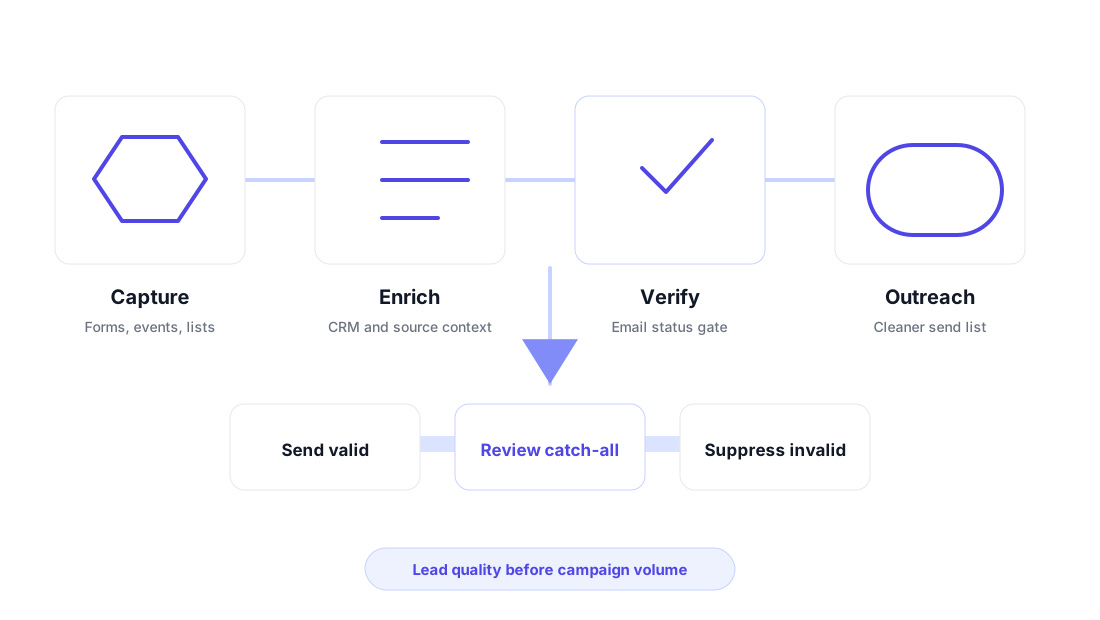
Verify captured, enriched, scraped, and imported leads before they hit sales outreach, so SDRs spend time on reachable contacts instead of dead addresses.
Need the exact cost before your next cleanup? Check VeriMails pricing and start with free credits.
Lead generation teams often optimize for volume first: more accounts, more contacts, more lists, and more enrichment. That creates pipeline only if the contacts are reachable. A list can match the right industry, company size, title, and geography, yet still fail because the email address is stale, guessed, mistyped, disposable, or attached to a role inbox that is not appropriate for person-level outreach.
VeriMails adds a quality gate before sales time is spent. Use real-time email verification when leads are captured through a form or custom workflow, and use bulk CSV verification when a list comes from enrichment, events, scraping, partner data, or an old CRM segment. The result is not just a cleaner file. It is a clearer decision about which records should move to outreach now, which need review, and which should be suppressed.
This matters because lead generation has two costs. The obvious cost is the data itself: enrichment, list building, events, tools, and research. The less visible cost is what happens after the lead enters the workflow. Reps spend time reading accounts, personalizing messages, loading prospects into a sequence, and following up. If the address is bad, every one of those steps was avoidable. Verification catches the issue earlier, while the fix is still cheap.
Verify leads wherever they enter your system, then use the result to route records into the right next step.
Verify email addresses when a lead submits a form, then tag invalid or disposable addresses before routing, enrichment, or rep assignment.
Run enriched leads through bulk verification before import. Clean data makes CRM reporting and outbound planning easier to trust.
Verify new lead data before it reaches the CRM. A simple verification status field prevents every downstream tool from treating weak records as ready to send.
B2B lists often include domains that accept mail broadly. VeriMails flags catch-all results so your team can review them separately.
Use verification status as a practical lead-quality signal. Clean contact data helps sales and marketing teams prioritize better records.
Every invalid address represents wasted research, enrichment, sequencing, and follow-up. Verification filters those records before they consume more work.
Keep the process simple enough for growth, RevOps, and sales teams to use on every list.
Check addresses when leads arrive from forms, events, enrichment, or sourced lists. If the lead is already in the CRM, verify before it moves into a new campaign.
Use the result as a lead-quality field. Valid records can move forward, catch-all and risky records can be reviewed, and invalid or disposable records can be suppressed.
Your SDRs and sequences start from a cleaner verified list with clearer categories across the funnel, instead of spending time on addresses that were never reachable.
The useful output is not a prettier spreadsheet. It is a decision system. Valid leads can enter normal outreach. Catch-all leads can be held in a separate segment, reviewed against account value, or sent more carefully. Risky leads should be judged by source quality and recency. Invalid and disposable addresses should not enter sales sequences or marketing automation.
This keeps lead generation aligned with deliverability. Under 3% bounce rate is healthy, 3-5% needs cleanup and attention, and above 5% is high risk. If a campaign is above that range, the next step is not more volume. The next step is better list hygiene before more sends go out.
For teams building a full outbound motion, connect this use case with CRM hygiene, cold email verification, and the guide to verifying emails before cold outreach. The same principle applies across the funnel: clean the input before the campaign depends on it.
The best teams make this repeatable. They keep the original lead source, the verification date, and the verification status as separate fields. That makes it easy to rebuild a send list later, compare source quality, and see which channels produce reachable contacts instead of just raw volume.
That source comparison is important for budget decisions. If one event, data provider, search workflow, or partner channel produces many invalid records, the problem should be visible before the next purchase. Verification turns list quality into an operating metric, not a surprise discovered after a campaign already bounced.
It also protects prioritization. A senior buyer at a strong-fit account should not be dropped just because the first sourced address is uncertain; that record belongs in review. A low-fit contact with an invalid or disposable address should not receive more research time. The verification result helps teams make that distinction consistently and reliably.
Keep the rules clear so campaign builders and sales managers make the same decision.
Use valid leads for normal sales outreach, especially when title, account fit, and source quality also match the campaign.
Keep catch-all and risky records separate. They may still be useful, but they should not be mixed blindly with clean lead lists.
Keep invalid and disposable addresses out of sales engagement, CRM nurture, newsletter, and reactivation workflows.