How to Verify Emails in Drip
Drip bills around active people and email sends, and watches deliverability across its sending infrastructure. People who can never receive an email can still move through workflows and quietly push your campaigns toward the spam folder. Verifying your list before you send keeps bounces low, protects your sender reputation, and gives you the files needed for accurate active-people cleanup.
TLDR
- Export your Drip people, run the CSV through bulk verification, and re-import a valid-only file before your next campaign.
- Use verification results to unsubscribe, deactivate, or delete invalid people so dead addresses stop entering Drip workflows and sends.
- Plan list cleanup before the next billing cycle and compare credit packs on pricing if you verify ecommerce lists regularly.
Why Verify Your Drip Contacts
Drip is an ecommerce marketing platform built around behavioral automation, where people move through workflows triggered by their actions. It checks address syntax when a person is added and it suppresses people after they hard bounce, but it does not confirm in advance whether each address is still deliverable. Addresses age, inboxes are abandoned, and imported lists carry typos. Drip only registers the problem after a campaign bounces, and by then the send has already counted against your reputation.
Bounces damage your sender reputation
Mailbox providers such as Gmail, Outlook, and Yahoo treat bounce rate as one of the clearest signals of list quality. When your Drip campaigns repeatedly hit addresses that do not exist, those providers route more of your mail to spam. Drip runs deliverability monitoring on its shared sending infrastructure, so a high bounce rate can put your account under review and lead to sending restrictions. Verifying before you send keeps bounces in the low fractions of a percent, which is the range that keeps you in the inbox.
You are billed for active people on a high watermark system
Drip bills on a high watermark system based on the highest number of active people and email sends reached during the billing period. That means deleting an address after the watermark is set may not change the current cycle. Verifying and cleaning dead addresses before the next period helps keep active-people counts accurate and supports future tier control where Drip's billing model applies.
Workflow automation breaks on dead addresses
Drip is centered on behavioral workflows, and a person who physically cannot receive mail will never open, click, or trigger the next step. Those people sit stuck in workflows forever, distorting your conversion reporting and your automation logic. A verified list means the people moving through your Drip workflows are real recipients whose behavior you can actually measure and act on.
Spam traps put your domain at risk
Lists imported into Drip from other platforms tend to carry recycled spam traps and role-based addresses such as info@ or shop@. Spam traps are addresses that blocklist operators monitor specifically to identify senders with weak hygiene, and a single hit can land your domain on a blocklist that affects every message you send. Verification surfaces traps and role addresses so you can remove or isolate them before they cause that damage.
What VeriMails Checks
VeriMails runs each address through several independent layers rather than a single pass-or-fail test. Each layer removes a different category of bad address, and together they produce a clear verification result operators can use for imports, removals, and review lists.
Syntax, MX, and DNS
The first checks confirm the address is correctly formatted, the domain resolves in DNS, and the domain publishes valid MX records pointing to a real mail server. An address that fails any of these can never receive a Drip campaign, so it is filtered out immediately.
Live SMTP handshake
VeriMails opens a real SMTP conversation with the receiving mail server to confirm that the specific mailbox accepts mail. This goes beyond confirming the domain works and confirms the individual address is deliverable. It is the check that best predicts whether your Drip send will reach the inbox or bounce.
Catch-all, disposable, and role-based detection
Some domains are configured as catch-all and accept mail for any address whether or not the mailbox exists. VeriMails applies catch-all detection and labels these results separately so you can treat them with care. It also flags disposable addresses from temporary-inbox services and role-based addresses tied to a function rather than a person. With each category labeled, you keep the people worth mailing and set the rest aside.
Pricing for Drip Users
VeriMails keeps verification affordable next to the value of a clean Drip list. Credit packs start at $0.0019 per email, and a 10,000-credit pack costs $19. Credit packs scale up to 5 million credits for $1,499, which suits large ecommerce lists and agencies handling several Drip accounts.
For teams that verify on a regular cadence, annual plans start at $12.50/month when billed yearly and bring the per-email cost down further. For Drip users, the strongest value is fewer stale people entering workflows, cleaner campaign segments, and active-people cleanup before future high-watermark counts are set.
You can try VeriMails without paying. Signup includes 100 free credits, no credit card is required, and credits never expire, so you can verify a sample list exported from Drip and review the results before committing.
Workflow Visual
Use this flow to keep Drip people and e-commerce automations from sending to dead addresses.
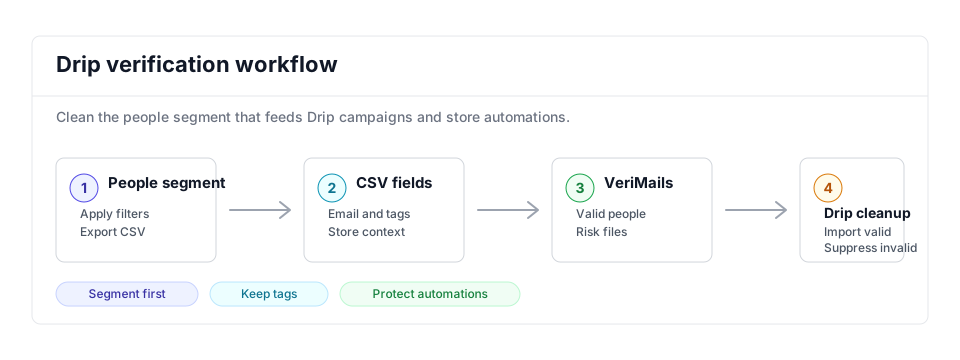
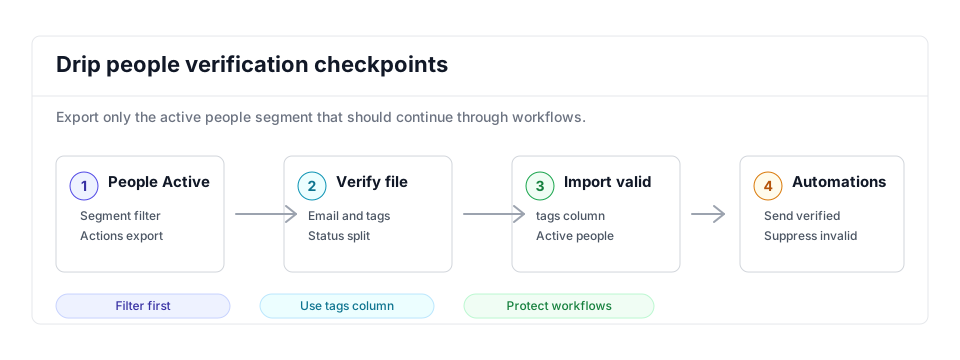
- Export scope: Create or open the Drip segment that matches the broadcast, workflow, or customer group you plan to clean.
- Matching field: Keep email, tags, custom fields, and customer context needed by Drip workflows.
- Result action: Import valid people and unsubscribe, delete, or quarantine invalid and disposable addresses before they trigger flows.
Step-by-Step
Export your people from Drip
In Drip, create a segment for the people you want to clean, or use one you already have. Open the segment and click the CSV button in the lower-left corner to start the export. Drip emails the CSV file to the address on your account settings, so check that inbox and download the file when it arrives.
Upload the CSV to VeriMails
Sign in to VeriMails and open the bulk verification tool. Drag in the CSV file you exported from Drip. VeriMails automatically detects the email column, so there is no need to reformat the file or strip out the other profile fields. The job runs as a queued bulk verification and shows downloadable filtered results when it completes.
Review the verification results
When the run completes, VeriMails groups each address by status: valid, invalid, catch-all, disposable, and role-based. Review the breakdown to understand the health of your Drip list, then download the filtered results. The valid-only file is your list of people that are safe to keep mailing.
Re-import the cleaned list into Drip
Back in Drip, use the import tool and upload or drag and drop the valid-only CSV from VeriMails. Format the column headings in lowercase with underscores so they map to Drip's built-in profile fields, then run the import. Drip's Bulk Operations let you apply tags or add the imported people to a workflow.
Remove or quarantine the invalid addresses
Use the invalid file from VeriMails to find those addresses in Drip and unsubscribe or delete them so they stop receiving campaigns. Then check active-people metrics and billing-cycle timing before assuming the cleanup affects your bill. Keep catch-all addresses in a separate tag rather than deleting them, since a share of them will be deliverable. Verifying again before each major campaign keeps your Drip list clean over time.
Drip Cleanup Checklist
Use this checklist when a Drip segment feeds a campaign, workflow, or ecommerce retention sequence. The goal is to keep only reachable people active in the sending path.
| Check | What to do | Why it matters |
|---|---|---|
| Segment source | Export the exact active-people segment tied to the campaign, workflow, store behavior, or customer group. | Prevents the cleanup from mixing buyers, subscribers, leads, and old inactive people. |
| Profile fields | Keep email, tags, custom fields, campaign names, lifetime value, and user ID where they exist. | Drip workflows often depend on profile data, so verification should not break automation context. |
| Valid import | Import valid rows with lowercase, underscore-formatted headers and apply a dated verified tag through Bulk Operations. | Keeps clean people easy to target and lets workflows branch on a verified marker. |
| Inactive handling | Unsubscribe, deactivate, or delete invalid and disposable rows according to your retention policy. | Reduces active people before they inflate sending risk or future billing counts. |
| Review group | Place catch-all and role-based rows in a separate tag for lower-volume or manual review sends. | Gives valuable customers a second look without putting the main campaign at risk. |
Frequently Asked Questions
Related Guides
Try VeriMails Free
100 free credits on signup. No credit card required. Put this guide into practice today.
Start Free