What Is VeriMails?
VeriMails is an email verification service that confirms whether an email address is valid and able to receive mail before you send to it. It combines syntax checks, DNS and MX lookups, and a live SMTP handshake into a single result, and it is built for marketers, sales teams, and developers who need clean data.
VeriMails checks email addresses before they reach your campaigns or database. Use the Email Verification API for real-time checks, bulk CSV verification for existing lists, and VeriMails pricing when choosing between credits and monthly plans.
VeriMails in one sentence
VeriMails is a software-as-a-service email verification platform that tells you, for any email address, whether mail sent to it is likely to be delivered. If you are evaluating verification tools, comparing alternatives, comparing pricing, or simply trying to understand what the product does, this article is the plain-language reference. Use it as a product overview, then check the linked pricing page before buying because plan details can change.
The product exists because invalid email addresses are expensive. When you send to an address that no longer works, the mail bounces. A handful of bounces is normal. A pattern of bounces tells inbox providers such as Gmail, Outlook, and Yahoo that you are not maintaining your list, and they respond by routing more of your mail to spam folders. VeriMails helps remove invalid addresses before you send, so you can keep bounce rates within a healthier range for your program.
How VeriMails verifies an email address
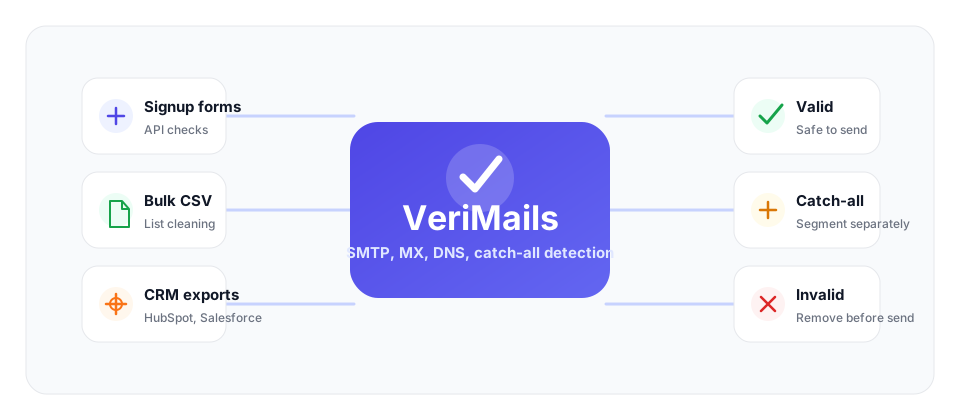
A VeriMails verification is not a single test. It is a sequence of checks, and each address is run through all of them. For a deeper breakdown of the same sequence, see how email verification works. The checks are:
Syntax validation
The first check confirms the address is formatted correctly. It looks for a valid local part, a single at sign, and a properly structured domain. Addresses with typos, illegal characters, or missing components are caught here before any network request is made.
DNS and MX record lookups
Next, VeriMails queries the domain name system to confirm the domain exists and publishes mail exchange records. A domain with no MX records cannot receive email, so the address is invalid regardless of how it is spelled.
Live SMTP handshake
This is the check that separates real verification from a surface-level format check. VeriMails opens a connection to the recipient mail server and begins the simple mail transfer protocol conversation that a sending server would use to deliver a message. The recipient server responds with whether it would accept mail for that specific mailbox. VeriMails never delivers a message and never sends anything to the inbox. It simply asks the question and records the answer.
Catch-all detection
Some domains are configured to accept mail for every possible address rather than rejecting unknown mailboxes. These are catch-all domains. On a catch-all domain, the SMTP handshake cannot confirm whether a specific mailbox exists, because the server accepts everything. VeriMails performs catch-all detection and flags the address accordingly, so you know the result is a domain configuration finding rather than a confirmed mailbox.
Disposable address detection
Disposable email addresses are temporary mailboxes from throwaway providers, often used to claim a signup bonus or pass a form without giving a real address. VeriMails identifies these and flags them so you can exclude them from marketing lists where they add cost but no engagement.
Role-based address detection
Role-based addresses such as info@, support@, sales@, and admin@ point to a function or a shared inbox rather than a person. They often have lower engagement and a higher complaint risk in marketing campaigns. VeriMails flags role-based addresses so you can decide how to treat them.
The main ways to use VeriMails
VeriMails fits three common workflows, and a single account can combine them.
| Workflow | Use it when | Next step |
|---|---|---|
| Real-time API | You need to stop typos, invalid addresses, and disposable emails before they enter a signup, checkout, or lead form. | Review the Email Verification API |
| Bulk CSV verification | You already have a CRM export, mailing list, event list, or campaign audience that needs cleaning before a send. | Use bulk email verification |
| Email Finder | You need business contact discovery with verification status available before outreach review. | Compare finder workflows |
The REST API
The API verifies one address at a time in real time and returns a clear result. The most common use is at the point of capture: a signup form, a checkout page, or a lead form calls the API the moment a visitor enters their address, and an invalid address is rejected before it enters your database. This keeps invalid addresses out from the start instead of forcing you to clean them later.
Bulk CSV verification
Bulk verification handles entire lists. You upload a CSV file, VeriMails verifies every row, and you download a results file with each address labeled. This is the right tool for cleaning a CRM export, a legacy mailing list, or a third-party contact file before an import. Both methods draw from the same credit balance, so you can mix them freely.
Which workflow should you start with?
Start with the API if bad addresses are entering through a form or product flow. Start with bulk verification if the risk is already sitting in a CRM, campaign tool, spreadsheet, or exported audience. Many teams use both: the API keeps new data clean, and bulk verification cleans historical lists before major sends.
What VeriMails costs
VeriMails has two billing models so you can choose the one that matches how you work.
Credit packs
Credits are a one-time purchase and they never expire. This model suits occasional or project-based verification, such as cleaning a CRM export before a launch or checking a one-off event list. See the pricing page for current pack sizes and amounts.
Monthly subscriptions
Subscriptions refresh a credit allowance every month and suit steady, recurring volume, such as ongoing form checks, weekly CRM hygiene, or agency list-cleaning workflows. Current monthly plans and allowances are listed on VeriMails pricing.
Every new account receives 100 free credits on signup. No credit card is required to claim them and they never expire, so you can verify a sample of your own data and see real results before deciding to pay.
The Email Finder
Alongside verification, VeriMails offers an Email Finder for teams that need outreach-ready business contacts. Returned finder results are verified before they are shown, so prospecting output can be reviewed before outreach. This pairs naturally with verification workflows because the contact result and deliverability check stay in one buying model.
Accuracy, speed, and reliability
VeriMails reports clear verification statuses for each address by combining syntax, DNS/MX, SMTP, catch-all, disposable, and role-based checks. It clearly flags cases that cannot be confirmed, such as catch-all domains, rather than treating them as confirmed. Single verifications return a clear result, and bulk jobs return labeled output that teams can review before sending. The accuracy overview explains why these result categories matter.
Who VeriMails is for
VeriMails is built for anyone whose results depend on email reaching a real inbox. Email marketers use it to protect deliverability and keep bounce rates low enough to avoid obvious list-quality problems; the bounce rate benchmark guide explains how to read those numbers. Sales teams clean prospect lists before cold outreach so their sending domains stay healthier. Developers wire the API into signup and checkout flows to keep invalid data out of the product. Agencies verify client lists at scale across many accounts. Recruiters confirm candidate emails before reaching out. The common thread is simple: clean data in, more reliable delivery out.
Frequently Asked Questions
Start with Clean Data
100 free credits on signup. No credit card required. Put the advice into practice today.
Start Free