Email Verification for Nonprofits
Email is one of the most cost-effective channels a nonprofit has, but only if messages reach real inboxes. Email verification removes dead and invalid addresses before a send, protecting deliverability so appeals, newsletters, and event invitations actually arrive.
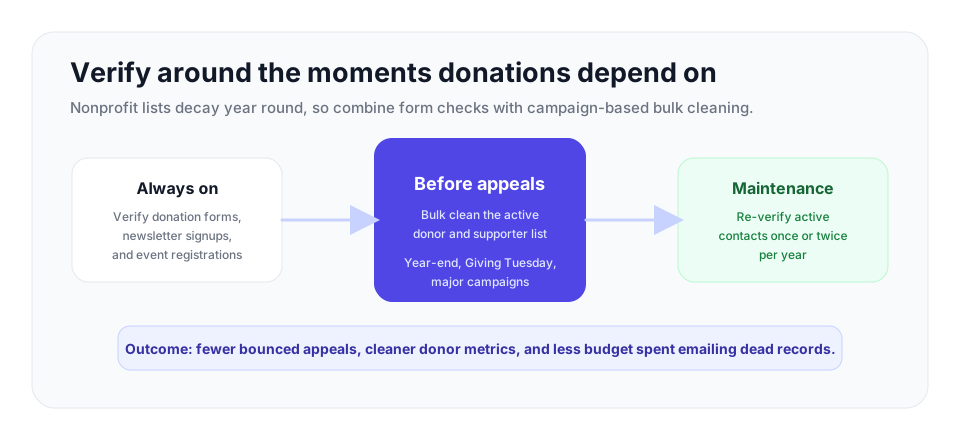
Nonprofits should verify before major appeals, at supporter capture points, and on a recurring list-maintenance schedule. The practical setup is real-time verification on donation and newsletter forms, plus bulk verification before Giving Tuesday, year-end appeals, and large event campaigns.
Why a nonprofit email list goes stale
Nonprofit email lists decay quickly. Industry analysis puts annual email list churn for nonprofits at roughly 30 percent, meaning that within a year about a third of the addresses on a list become unreachable or disengaged. Supporters change jobs and lose their work email. Students graduate and abandon a university address. People switch internet providers and leave an old mailbox behind. None of this is unusual, and none of it is anyone's fault. It is simply what happens to any contact list over time.
The problem is that a nonprofit often does not notice. The list keeps growing on paper as new sign-ups arrive, while a quiet share of it has become unreachable underneath. When the next major appeal goes out, it is sent to that mix of reachable and unreachable addresses, and the unreachable ones bounce.
What bounces cost a nonprofit
A bounce is a message that the receiving mail server refused because the address does not exist. A small number of bounces is normal and harmless. A pattern of bounces is not. Inbox providers such as Gmail, Outlook, and Yahoo watch how much of a sender's mail bounces, and they treat a high bounce rate as a signal of a poorly maintained sender. Staying under 3 percent is generally healthy; once a list climbs past 5 percent, it becomes a deliverability risk that should be fixed before the next appeal.
When a nonprofit crosses that line, the consequences are not limited to the unreachable addresses. The provider lowers the sender's reputation, and that lower reputation affects every message, including the ones sent to genuine, engaged supporters. Appeals start landing in spam folders. Open rates fall. Donations fall with them. For an organization that depends on email to fund its mission, a damaged sender reputation is a direct hit to revenue.
There is also a simple cost question. Most email service providers charge by the size of the list or the number of messages sent. Every dead address a nonprofit pays to store and mail is budget that produces nothing. A list that is 30 percent stale is a list a nonprofit is overpaying to maintain.
What email verification does
Email verification checks each address before you send to it and tells you whether mail to that address is likely to be delivered. VeriMails runs a sequence of checks on every address. It validates the syntax to catch typos and malformed entries. It checks DNS and MX records to confirm the domain exists and can receive mail. It performs a live SMTP handshake, connecting to the recipient mail server and asking whether it would accept mail for that specific mailbox, without ever sending a message. It performs catch-all detection to identify domains that accept mail for every address. It performs disposable detection to flag temporary throwaway addresses, and role-based detection to flag shared addresses such as info@ and donate@.
The result is a labeled list. Valid addresses are safe to keep. Invalid addresses are the ones to remove before the next send. Catch-all and role-based addresses are flagged so the nonprofit can decide how to treat them. VeriMails reports clear verification accuracy, which comes from completing that live SMTP handshake rather than guessing from syntax alone.
When a nonprofit should verify
Verification fits the nonprofit calendar in three places.
| Nonprofit moment | What to verify | Why it matters |
|---|---|---|
| Donation form | Run an API check before the supporter record is created. | Receipts, thank-you messages, and tax acknowledgments need a reachable inbox. |
| Event registration | Verify new registrant addresses as they enter the CRM. | Event reminders and follow-up appeals depend on the first address being correct. |
| Major appeal prep | Bulk verify the appeal audience a few days before scheduling the campaign. | The highest-value sends should not be the moment you discover stale donor data. |
| Mid-year maintenance | Clean active donors, lapsed donors, volunteers, and newsletter contacts by segment. | Smaller recurring passes keep decay from building up before year-end. |
Before every major appeal
Year-end giving, Giving Tuesday, and spring campaigns are the highest-stakes sends of the year. They are also the moments when a damaged sender reputation does the most harm. Verify the full list a few days before each major appeal so the campaign goes out clean. A bulk CSV upload handles this in one pass.
At the point of sign-up
Donation forms, newsletter sign-up boxes, and event registration pages collect new addresses every day, and some of them carry typos. The VeriMails REST API verifies an address in real time, as the supporter submits the form. An invalid address can be flagged on the spot so the supporter corrects it, which means invalid addresses never enter the database in the first place.
On a regular schedule
Because lists decay continuously, a one-time clean does not last. Re-verify the active list at least once or twice a year so the list keeps pace with churn. Nonprofits that send frequently may verify quarterly.
What email verification costs a nonprofit
Cost is a real constraint for any nonprofit, and verification is inexpensive. VeriMails credit-pack balances never expire, which fits the campaign-based way most nonprofits send. The credit tiers start at 10,000 for 19 dollars, 25,000 for 39 dollars, 50,000 for 59 dollars, and 100,000 for 99 dollars. A nonprofit with a list of 25,000 supporters can verify the entire list for 39 dollars, and because credits never expire, it can buy a larger tier once and draw it down across several campaigns over the year.
For organizations that send steadily, VeriMails subscriptions refresh an allowance every month, starting with the Starter plan at 15 dollars for 10,000 verifications and the Pro plan at 39 dollars for 50,000. Every new account also gets 100 free credits on signup, with no credit card required, so a development team can verify a sample of the donor list and see the results before spending anything.
The donor data quality payoff
Clean data does more than protect deliverability. A verified list gives a development team accurate metrics. When bounces are removed, open and click rates reflect real engagement rather than being dragged down by addresses no one is reading. That makes it easier to see which appeals are working and which segments are most responsive. Verification also keeps the donor database itself tidy, which matters when that data feeds a CRM, a fundraising report, or a board update. For a nonprofit, every supporter relationship counts, and verification helps make sure the organization can actually reach the people who have chosen to support its mission.
- Keep invalid addresses out of appeal audiences, but retain the donor record for stewardship history.
- Review role-based addresses such as info@, donate@, and office@ before putting them into personal donor journeys.
- Segment catch-all results separately when the next send is high volume or time sensitive.
- Pair verification results with engagement data so valid but inactive contacts can move into a re-engagement path.
Frequently Asked Questions
Start with Clean Data
100 free credits on signup. No credit card required. Put the advice into practice today.
Start Free