The Cheapest Email Verification Services
If you are verifying large lists, a fraction of a cent per email adds up fast, so price matters. But the cheapest advertised option is not always the cheapest on your invoice, and it is definitely not always the most accurate. This guide covers the genuinely low-cost email verification services in 2026 and how to spot the cheap tools that quietly cost you more.
The cheapest email verification service is not just the lowest headline rate. Model the effective cost after credit expiry, unknown or catch-all handling, duplicate billing, and whether the tool still runs SMTP-level checks. VeriMails pricing is the value-first option for teams that want low-cost bulk and API verification, while MillionVerifier and EmailListVerify are worth comparing for budget bulk list cleaning.
What cheap really means in email verification
The headline per-email rate is the number every buyer looks at first, and it is the wrong number to stop at. Three things sit between the advertised price and the amount you actually pay: the volume tier you buy into, whether credits expire, and how the tool counts certain results. A service that looks expensive on a 2,000 credit pack can be cheap on a 1 million pack, and a service with a low headline rate can cost more than expected once it charges you for catch-all and unknown results.
Accuracy is the other half of the equation. A cheap verifier that returns too many false positives is not actually cheap, because false positives can become bounces, and bounce-related reputation damage can outweigh verification savings. So the real question is not just which service is cheapest, but which service is cheapest while still checking the address deeply enough for your use case. If your main concern is deliverability impact, pair this guide with the bounce-rate reduction guide.
The cheapest credible email verification services in 2026
These are the low-cost services worth considering. Use them as a shortlist, then compare the current checkout price at your real list size before buying credits.
| Service | Cost posture | High-volume fit | Credits expire? | Best fit | Caveat |
|---|---|---|---|---|---|
| VeriMails | $19 for 10,000 credits and $99 for 100,000 credits. | Strong value through million-scale packs. | No, credit-pack balances never expire. | Teams that want low-cost bulk verification plus API checks. | Best when you want verification infrastructure, not a full deliverability suite. |
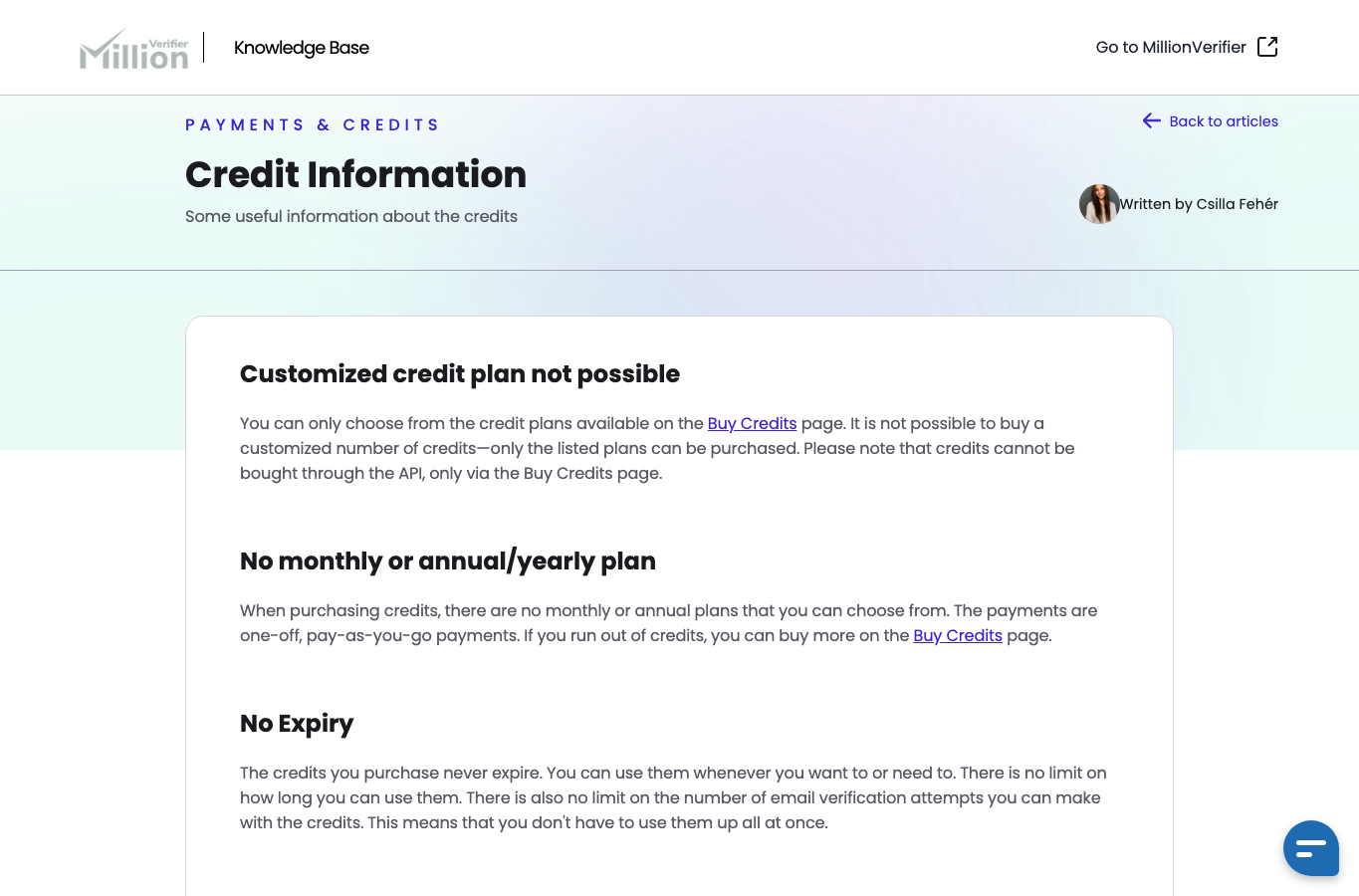
| MillionVerifier | Low-cost bulk positioning, especially from 100,000 emails upward. | Very competitive at large volume. | No, paid credit-pack balances never expire. | Price-sensitive bulk cleaning. | Test catch-all and unknown handling on your actual outreach data. |
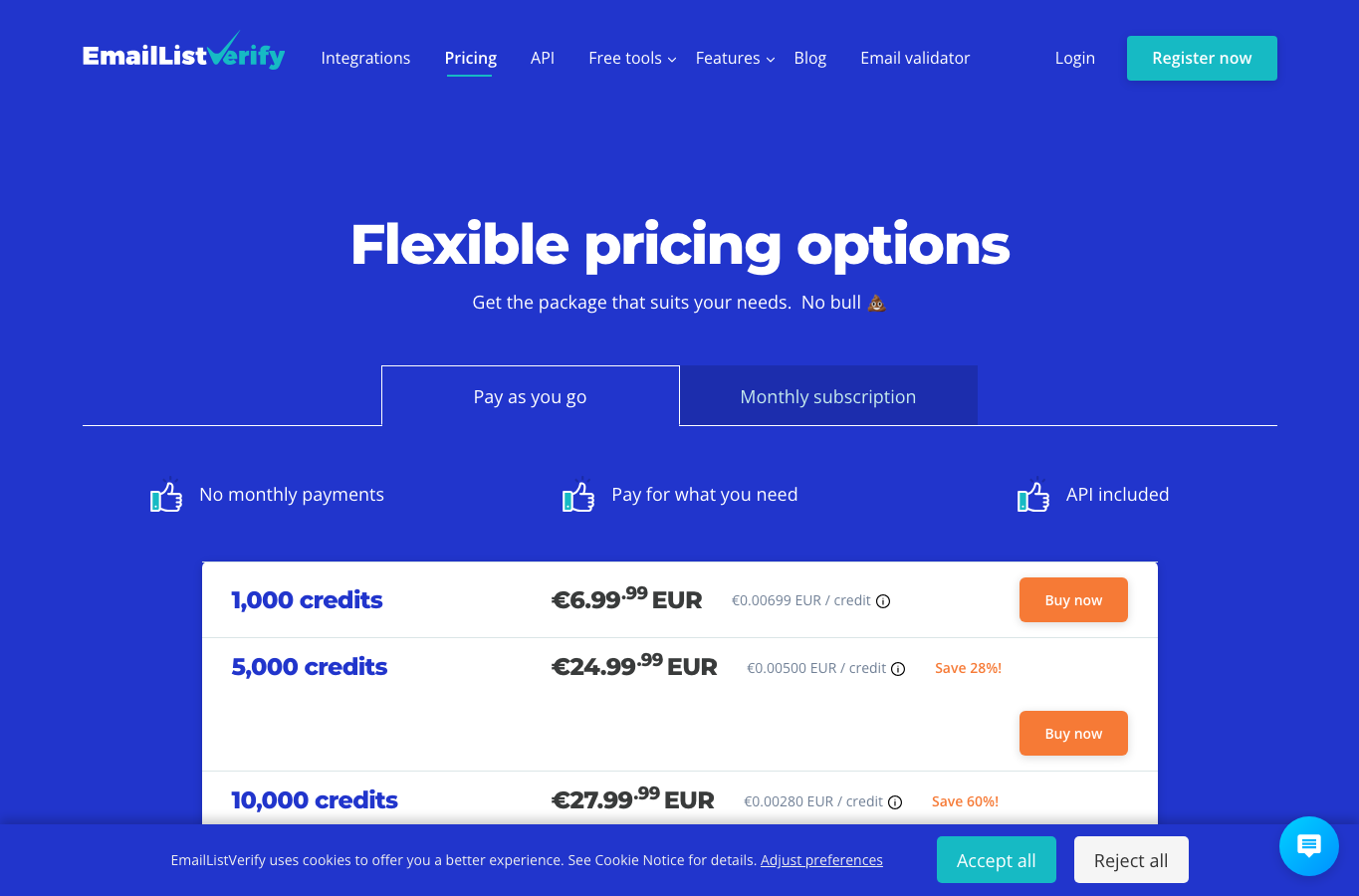
| EmailListVerify | Budget-oriented credit-pack and monthly modes. | Good for straightforward list cleaning. | Credit-pack balances do not expire. | Simple bulk uploads with API access available. | Less useful if you need a premium deliverability suite. |
| Bouncer | $60 for 10,000 and $400 for 100,000 listed credit packs. | Clear but pricier than value-first tools. | No, credits never expire. | Teams that want a polished credit-pack verifier. | Higher cost at common campaign volumes. |
| ZeroBounce | Premium pricing, with broader suite packaging. | Better if you also use suite features. | Credit-pack balances do not expire. | Buyers who want verification plus deliverability tools. | Usually not the cheapest pure-verification path. |
VeriMails
VeriMails starts at $0.0019 per email, which places it at the low end of the market, and it gets there without thinning out the verification. The platform is built around syntax, MX, DNS, SMTP-level checks where server behavior allows, catch-all detection, disposable detection, and role-based detection. A 10,000 credit pack is $19, and volume pricing runs down to 5 million credits for $1,499. Credits never expire, so buying a larger pack reduces expiry risk. Monthly plans start at $15. There is no separate charge for catch-all or unknown results, and 100 free credits come with every new account. For teams that want a low price and a full verification workflow, VeriMails is one of the strongest value picks.
MillionVerifier
MillionVerifier is consistently one of the cheapest options at scale. Its credit model favors fixed packs, non-expiring balances, and high-volume list cleaning. If your single priority is the lowest cost on very large lists, MillionVerifier deserves a place on your shortlist. Compare it against VeriMails vs MillionVerifier if you also care about workflow, API fit, and result categories.
EmailListVerify
EmailListVerify is another value option. Small-volume pricing is commonly evaluated around $4 to $5 per 1,000 credits, falling toward $0.0019 per email at large scale, with credits that do not expire. It is a solid choice for buyers who want a low rate and a long-established service.
Bouncer and other low-cost options
Bouncer sits higher on small-volume price, drops at higher volumes, and offers credits that do not expire in a polished checkout flow. Several smaller specialist verifiers advertise very low per-email rates at huge volume, sometimes a fraction of a cent. These can be worth testing, but accuracy and check depth vary more at the bottom of the market, so always verify a sample list before committing budget.
Cheapest choice by list size
Your cheapest credible choice changes with volume. A 5,000 address cleanup should not be judged by a 5 million credit tier, and a 1 million list should not be priced from a starter pack.
| List size | Best buying move | Why it matters | Next step |
|---|---|---|---|
| Under 10,000 emails | Use a small non-expiring pack or a free sample before buying more. | Starter tiers can make premium tools look expensive even if their large packs are more efficient. | Start with a representative test and compare result categories before scaling. |
| 10,000 to 100,000 emails | Compare VeriMails, MillionVerifier, and EmailListVerify against your exact list size. | This is where price differences become visible, but shallow checks can still create expensive false positives. | Use the best tools guide to balance price with workflow fit. |
| 100,000 to 1 million emails | Run a sample through one value-first verifier and one bulk-budget verifier. | At this volume, the cheapest invoice is only useful if the results are safe enough to send. | Calculate cost per usable result, not only cost per uploaded email. |
| Seasonal or uneven volume | Prioritize non-expiring credits before buying a larger discounted pack. | Expired credits can erase the savings from a low per-email rate. | Compare current tiers in the email verification pricing guide with any annual expiry policy before purchase. |
When low-cost verification gets expensive
Some services look cheap upfront but cost more in practice. Three patterns are worth watching for.
Tools that skip the live SMTP check
The most common shortcut at the low end is relying only on syntax checks, MX lookups, and historical data. This makes a tool cheaper to operate, but it can produce more false positives, because a domain can have valid MX records while a specific mailbox does not exist. VeriMails is designed for SMTP-level mailbox checks because that is the layer that catches addresses surface checks miss. For the full sequence, read how email verification works.
Tools that charge for catch-all and unknown results
On B2B lists, a meaningful share of addresses sit on catch-all domains. A tool that charges full price for a catch-all or unknown verdict, even though it could not give you a definitive answer, costs more than its headline rate suggests. Treat catch-all as a decision signal, not a guaranteed mailbox. The catch-all verification guide explains how to use those results in campaigns.
Tools where credits expire
If a tool's credits expire after 12 months, buying a large discounted pack only pays off if you use it inside the year. For teams with uneven or seasonal volume, that can mean paying for credits that quietly vanish. Choosing a tool where credits never expire, as with VeriMails, removes that risk and lets you buy ahead at the lower volume rate.
How to cut your verification costs the right way
You can lower your bill without sacrificing accuracy. First, deduplicate your list before uploading, since you should never pay to verify the same address twice. Second, buy credits in larger packs to reach a lower per-email tier, but prefer a tool where credits never expire so the bulk purchase is safer. Third, pay attention to catch-all and unknown treatment if your lists are B2B-heavy. Fourth, run a free sample before committing, so you can confirm accuracy at the price you are being quoted. VeriMails supports every one of these moves: bulk packs down to $0.0019 per email, credits that never expire, no surcharge on catch-all or unknown, and 100 free credits to test first.
- Start with list hygiene: remove duplicates and old obvious junk before any paid run.
- Buy against real volume: compare 10,000, 100,000, or 1 million credits based on actual campaign size.
- Keep credits flexible: non-expiring credits fit seasonal and project-based verification better.
- Use result categories: valid, invalid, catch-all, disposable, role-based, and unknown should drive different sending decisions.
Low-cost billing notes
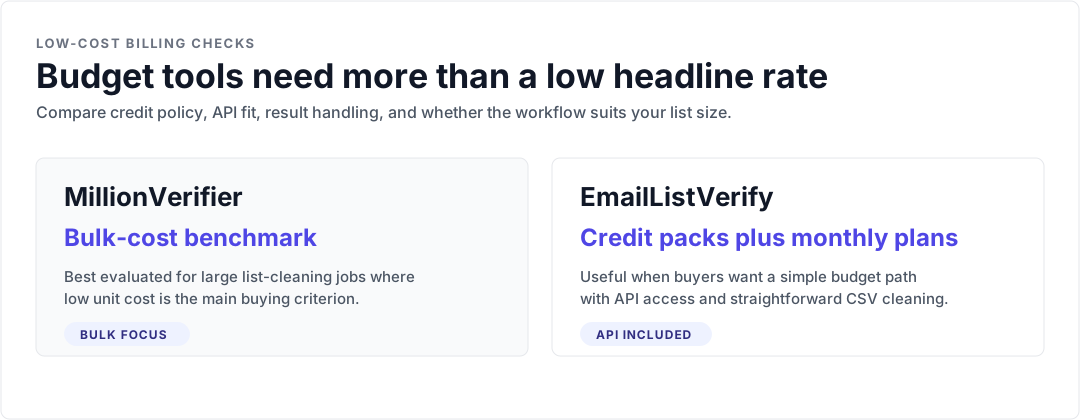
The visual below shows the details buyers should check before picking a cheap verifier: credit model, expiry policy, and whether the workflow is built for API, bulk, or both.
The bottom line
The cheapest email verification service is not simply the one with the smallest advertised number. MillionVerifier and EmailListVerify are genuinely low-cost options at scale, and VeriMails starts at $0.0019 per email while supporting SMTP-level checks, catch-all detection, disposable detection, and role-based detection. The weak choices are the ones that reach a low headline rate by doing shallow checks or by making uncertain results hard to act on. Pick a service that is inexpensive and thorough, then test it on a sample before sending the full list.
Frequently Asked Questions
Start with Clean Data
100 free credits on signup. No credit card required. Put the advice into practice today.
Start Free