Email Verification for Data Providers
Data buyers judge you on accuracy. VeriMails gives data providers bulk verification and an API to validate email records before enrichment exports, customer downloads, and recurring dataset refreshes.
Make verification part of the data product.
When customers buy contact data, they expect email fields to be usable. VeriMails helps data providers verify records before export, pass clear status fields to customers, and refresh large datasets without adding manual review work.
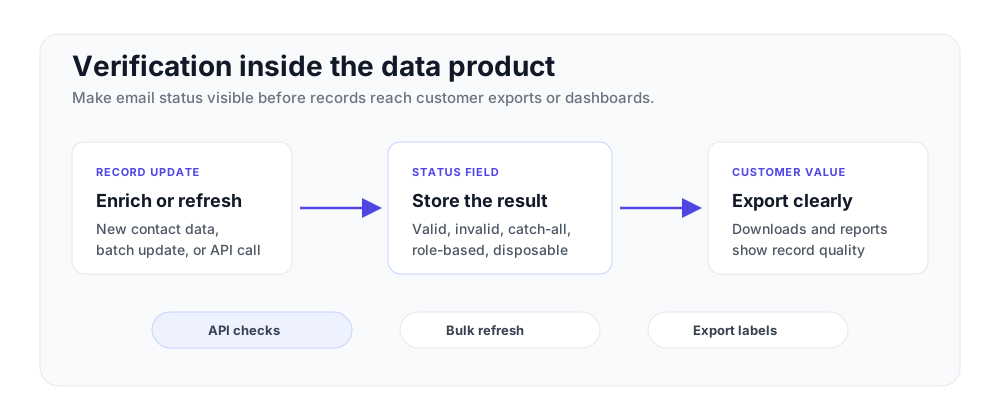
For data providers, email verification is not just a deliverability add-on. It is part of the product promise. Customers buy data because they need records that support sales, marketing, recruiting, enrichment, or analytics workflows. When email fields fail, trust in the dataset drops quickly.
VeriMails can sit inside that product workflow. Use the email verification API for real-time enrichment, record updates, and customer exports. Use bulk verification for large refreshes, dataset review, and one-off customer files. Status fields help your platform distinguish usable records from invalid or risky ones.
The key is to present verification honestly. Catch-all, role-based, disposable, and invalid results should be visible in your own schema, customer exports, or internal quality dashboards so buyers understand what they are receiving.
Why data providers verify with VeriMails
Verification improves the customer-facing quality layer around the records you sell or enrich.
Verify inside the pipeline
Use the API when records are enriched, updated, routed, or prepared for export.
Refresh large datasets
Run bulk jobs for aging lists, customer files, or scheduled database cleanup.
Return clear status fields
Pass verification status through to products, exports, and quality workflows.
Label risky records honestly
Catch-all, role-based, and disposable flags help avoid overselling uncertain contacts.
Reduce customer friction
Cleaner email fields lower the volume of avoidable data quality disputes.
Reverify over time
Schedule refreshes so old records do not keep carrying old confidence.
Where verification fits in data provider workflows
Use VeriMails where email data moves from internal records to customer-facing value.
| Moment | Risk | VeriMails use case | Business outcome |
|---|---|---|---|
| Record enrichment | Newly enriched records need a verification status before use. | Call the API during enrichment or record update jobs. | Your product stores status alongside the email field. |
| Customer export | Downloads can include stale or risky records if no final review runs. | Verify records before export or delivery. | Customers receive cleaner data with clearer status labels. |
| Bulk refresh | Large datasets decay even when no one touches them. | Run scheduled bulk jobs against aging segments. | Record quality improves without manual review of every row. |
| Data quality reporting | Support teams need a shared language for email accuracy. | Expose valid, invalid, catch-all, role-based, and disposable statuses. | quality, product, and customer teams can discuss records consistently. |
Data provider integration checklist
Use this before adding verification to a customer-facing data workflow.
How it works
Plug verification into your data pipeline.
Choose API or bulk
Use the API for record-level workflows and bulk verification for large refresh jobs.
Map statuses to your schema
Store valid, invalid, catch-all, role-based, and disposable results in fields your product can use.
Ship clearer data
Use the status fields in customer exports, quality dashboards, and support workflows.
Clear VeriMails use cases for data providers
Verification fits the moments where records become product value.
Enrichment API layer
Verify emails as records are enriched, updated, or requested through your product.
Customer export check
Run a final verification pass before high-value files are downloaded or delivered.
Scheduled dataset refresh
Clean aging contact records through recurring bulk or batch jobs.
For data products, clarity matters: status fields make email quality visible instead of relying on broad claims.
Protect the dataset before customers touch it
Your buyer judges the file by the first import. If the first sample bounces, the whole dataset feels risky even when most records are good. Verify every export before delivery, then separate valid, invalid, catch-all, role-based, and disposable addresses in the file you hand over. The customer gets cleaner rows, and your support team gets fewer disputes about contact quality.
Use VeriMails as a final quality gate after enrichment and normalization. Run API checks for small batches, bulk jobs for full files, and a consistent suppression rule for records that should never ship. Link the cleaned output to your lead generation workflow, document the price on VeriMails pricing, and keep stale addresses out of future refreshes before they become refunds.
Frequently asked questions
What data teams ask before building verification into a product workflow.